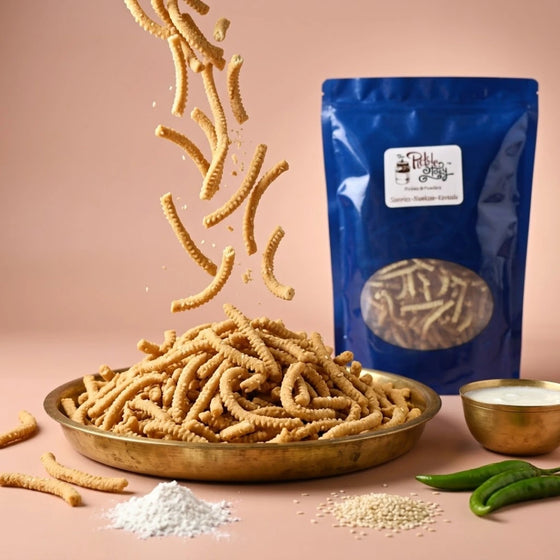
Not made in a lab. Made by Amma.
150-year-old family recipes, still mixed by hand.
- No preservatives
- Small batches
- Made by hand
From our kitchen to your table
01 / 05 · Everyone's AmmaWhy we still make every jar the old way
02 / 05 · 3 ways to eat MaagaiIn dal, with curd rice, or hot rice and ghee
03 / 05 · Why we made The Andhra BoxJaiveer Rao, CEO, on our heritage gift box
04 / 05 · Our bestsellers, all in one placeAllapkai, Majjiga Murukku and Paradha Puri
05 / 05 · How we make Majjiga MurukkuButtermilk dough, fried crisp, then de-oiled
 01
Everyone's Amma
01
Everyone's Amma
 02
3 ways to eat Maagai
02
3 ways to eat Maagai
 03
Why we made The Andhra Box
03
Why we made The Andhra Box
 04
Our bestsellers, all in one place
04
Our bestsellers, all in one place
 05
How we make Majjiga Murukku
05
How we make Majjiga Murukku
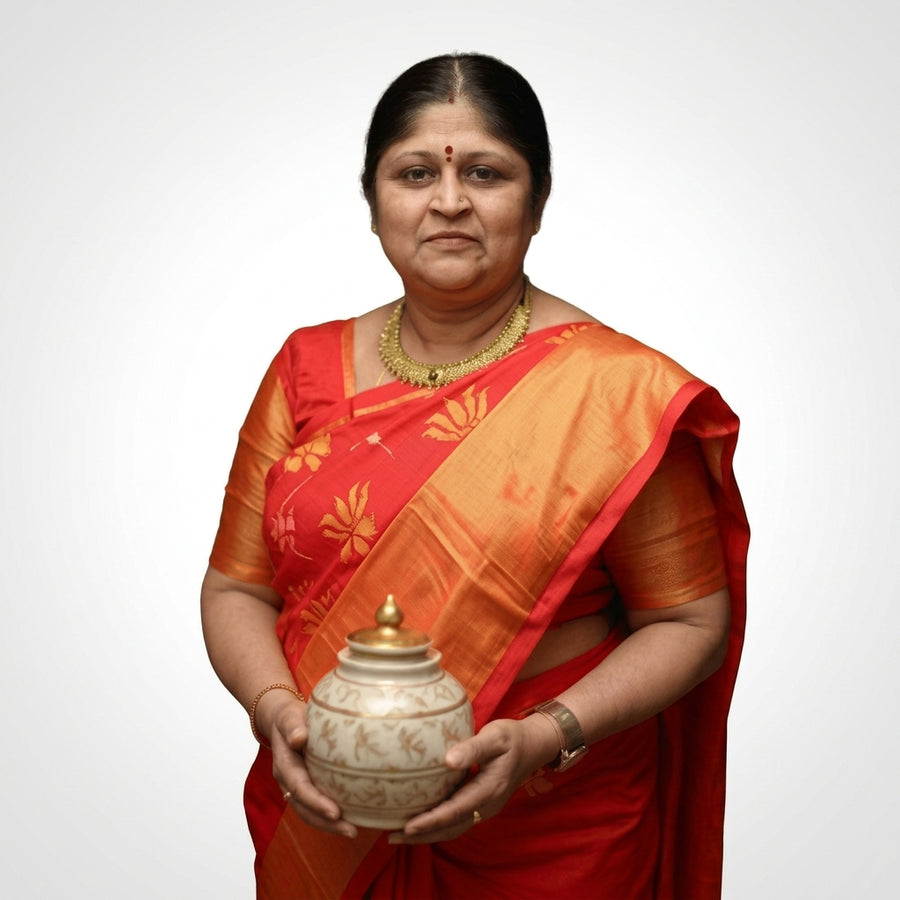
Amma isn't one person's mother. She's the one who cooks for everyone, and won't let you leave her kitchen hungry. That's how we've made every jar for eight years: Andhra recipes our family has handed down for over 150 years, made by hand in small batches, with no preservatives, no artificial colours and never palm oil. More than 25,000 families now eat from Amma's kitchen, and in 2023 our work with millets was mentioned in the Prime Minister's Mann Ki Baat.
Made like a mother makes it. For everyone she feeds.
America loves The Pickle Story! Uncle Jaiveer and his staff make fantastic product. We ordered pickle and honey as gifts for our wedding gifts in our wedding in Minnesota, USA. Everyone loved it and raved about it for years. Just returned and ordered another set to fill every gap in my suitcase home. Come here. Leave happy.
Google reviewWedding gifts, USA
We bought pickles from Pickle Story and I never expected this level of authenticity. The taste of Magaya, Lemon pickle, and Bellam Avakaya instantly took me back to my childhood days. It truly feels like homemade with so much love and care. Really appreciate such efforts in keeping our traditional flavors alive.
Google reviewMagaya, Lemon, Bellam Avakaya
I tried both “The Pickle Story” Millet Health Mix and Millet Chocolate Health Mix in the porridge form at a family breakfast get together. The response was an unequivocal “WOW” as both the products were so scrumptious that we finished the two packets in one go! You have my family vote.
Google reviewMillet health mixes
Got an opportunity to taste the Mango Ginger & Tamarind pickles from “The Pickle Story”… Loved the spicy, tangy and overall flavor of the pickles. Hot rice with ghee and “The Pickle Story” is my choice for the rainy game day evening dinner!
Google reviewMango Ginger, Tamarind
From Amma's kitchen to yours
Raw mangoes, gongura and chillies bought in season from the regions that grow them best.
Cut and pounded by hand in small batches, never machine-minced.
Spices roasted and ground fresh, then cured slowly in sesame oil for mango pickles, peanut oil for the rest.
Packed leak-proof and dispatched within 36 hours of your order.
The Pickle Story is a homemade Andhra food brand from Secunderabad, Hyderabad. Since 2018, Amma's family recipes, more than 150 years old, have been made by hand in small batches in our FSSAI-licensed kitchen. No preservatives, no artificial colours and never palm oil: sesame oil for our mango pickles, peanut oil for the rest.
Shop homemade Andhra pickles like Avakai, Gongura and Allapkai, Bhimavaram chicken and prawn pickles, hand-roasted podis and spice powders, traditional snacks and murukkus, Andhra sweets, millet health mixes, sun-dried fryums and papads and millet idly and dosa mixes. New to us? Start with a pickle or podi taster pack, pick a combo, or gift the Andhra Box.
Dispatched within 36 hours and delivered across India and to 12+ countries, to more than 25,000 happy families. Read our story.
No. Our pickles are preserved the traditional way, with salt, spices and oil, and nothing else.
Sesame (gingelly) oil for our mango pickles and peanut oil for our other pickles, the way Andhra pickles have always been made. Never palm oil. Our Bhimavaram chicken and prawn pickles are made in peanut oil too.
We dispatch every order within 36 hours and deliver across India.
We replace it free. Send us a photo on WhatsApp or email and we will ship a new one.
Delivery is free on orders above ₹799. Below that it is ₹49.
Yes. You get one free 50 g sample for every ₹1,000 you spend, up to 3 per order. Pick from Bhindi Podi, Udikkina Thokku or Gongura in the cart.
Our veg pickles, podis and snacks are made in small batches, by hand, in our FSSAI-certified kitchen in Secunderabad, Telangana. Our chicken and prawn pickles are not made in our kitchen: they are specially made by Raju’s of Bhimavaram, to their family recipes.
Added to cartAdding to cart…
Special offers unlocked Up to ₹50 off
Add one to your order. One special offer per order.
Offer added. One special offer per order.
 Majjiga Murukku
100 g Pouch
₹55
Majjiga Murukku
100 g Pouch
₹55  Pickle Taster Pack
Allapkai, Avakaya, Gongura, Tomato
₹184
Pickle Taster Pack
Allapkai, Avakaya, Gongura, Tomato
₹184  Podi Taster Pack
Bhindi, Idly Karam, Putnala, Bittergourd
₹184
Podi Taster Pack
Bhindi, Idly Karam, Putnala, Bittergourd
₹184  The Andhra Box
Gift box
₹649
The Andhra Box
Gift box
₹649  Allapkai Pickle
250 g Pouch
₹160
Allapkai Pickle
250 g Pouch
₹160 0 items in cart